



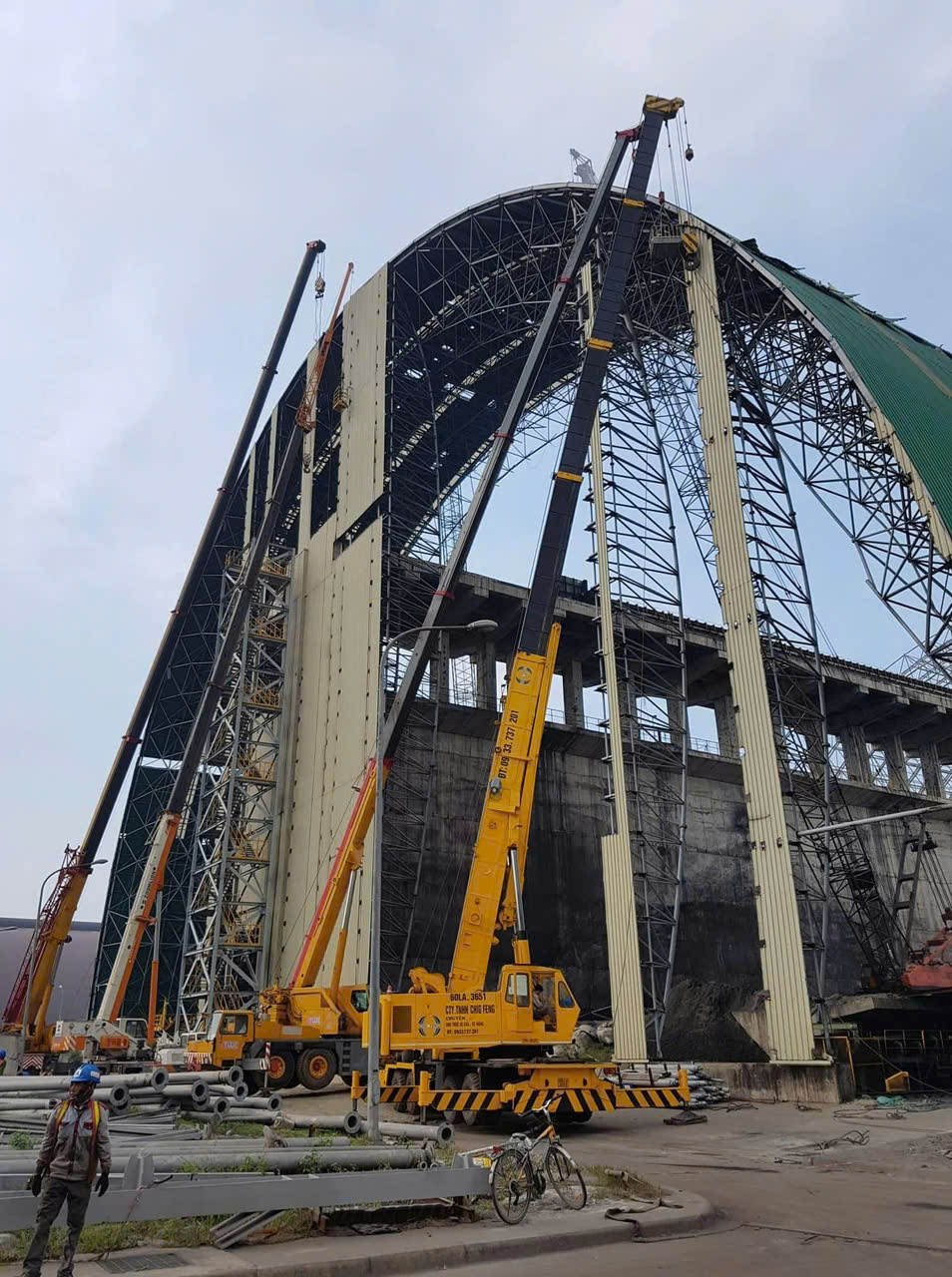
In industrial and civil construction projects, crane installation and equipment installation are critical stages that directly affect the project’s schedule and quality. This work requires high precision and seamless coordination between technical teams, equipment, and personnel. With many years of experience in M&E (mechanical and electrical) construction and building, Hưng Tịnh would like to share some knowledge and practical insights to ensure that the crane and equipment installation process is safe, efficient, and professional.

1. Overview of Crane and Equipment Installation for Construction Projects
Crane installation is the process of using cranes or other lifting equipment to move equipment and components (such as tanks, steel structures, machinery, and mechanical-electrical equipment) to the designated installation position according to the design drawings. After lifting into place, workers and engineers carry out alignment, bolt fastening, welding, or technical connections to complete the installation.
This process is typically applied in projects such as:
-
Industrial plants (lifting silos, machinery, production lines, etc.)
-
High-rise buildings (elevators, HVAC systems, generators, etc.)
-
Infrastructure projects (electric poles, transformers, pumping systems, etc.)

2. Professional Crane and Equipment Installation Procedures
At Hưng Tịnh, all crane installation activities follow standardized procedures to ensure safety and quality. The basic process includes:
a. Site Survey:
Survey the terrain, construction site conditions, identify obstacles and assess accessibility for the crane.
b. Crane Installation Planning:
Based on the equipment’s size and weight, the technical team prepares detailed crane plans and selects appropriate cranes (mobile cranes, tower cranes, forklifts, etc.).
c. Equipment and Tool Inspection:
Before execution, inspect all lifting equipment, slings, hooks, and safety devices such as load sensors and signals.
d. Execution Organization:
Divide the work team according to specific tasks: crane operators, riggers, supervisors, and installers. Throughout the process, a crane supervisor and a clear signaling system must be in place.
e. Installation and Alignment:
After lifting into position, the equipment is aligned using laser tools or manually (depending on requirements) and then firmly fixed.
f. Inspection and Acceptance:
Final checks on tightness, accuracy, re-measuring dimensions, and acceptance according to technical documentation.

3. Important Notes for Crane and Equipment Installation
-
Safety First: Never proceed without safety measures, especially when working at heights or near populated areas.
-
Team Coordination: Each operation requires synchronization. Crane operators and riggers must understand signals and anticipate situations.
-
Weather Control: Avoid working in strong winds, heavy rain, or slippery surfaces.
-
Equipment Protection: During lifting, protect equipment from impacts, and prevent tilting or uncontrolled rotation.
4. Practical Experience from Hưng Tịnh
Throughout hundreds of projects, the Hưng Tịnh team follows three golden principles:
-
Thorough Preparation – Efficient Execution – Solid Completion
-
Modern Equipment – People as the Core
-
Flexibility on Site – Precision per Design
We have handled complex crane installations such as installing heavy chillers on rooftops, lifting pressure tanks in tight spaces, and installing freight elevators in operational factories. Each project provides valuable lessons that help Hưng Tịnh improve and elevate its construction capabilities.
Conclusion
Crane and equipment installation require professionalism and technical expertise. Choosing a reputable contractor like Hưng Tịnh will give investors peace of mind about progress, quality, and safety. If you are looking for a reliable partner in construction and M&E projects, do not hesitate to contact us for prompt consultation and support.